
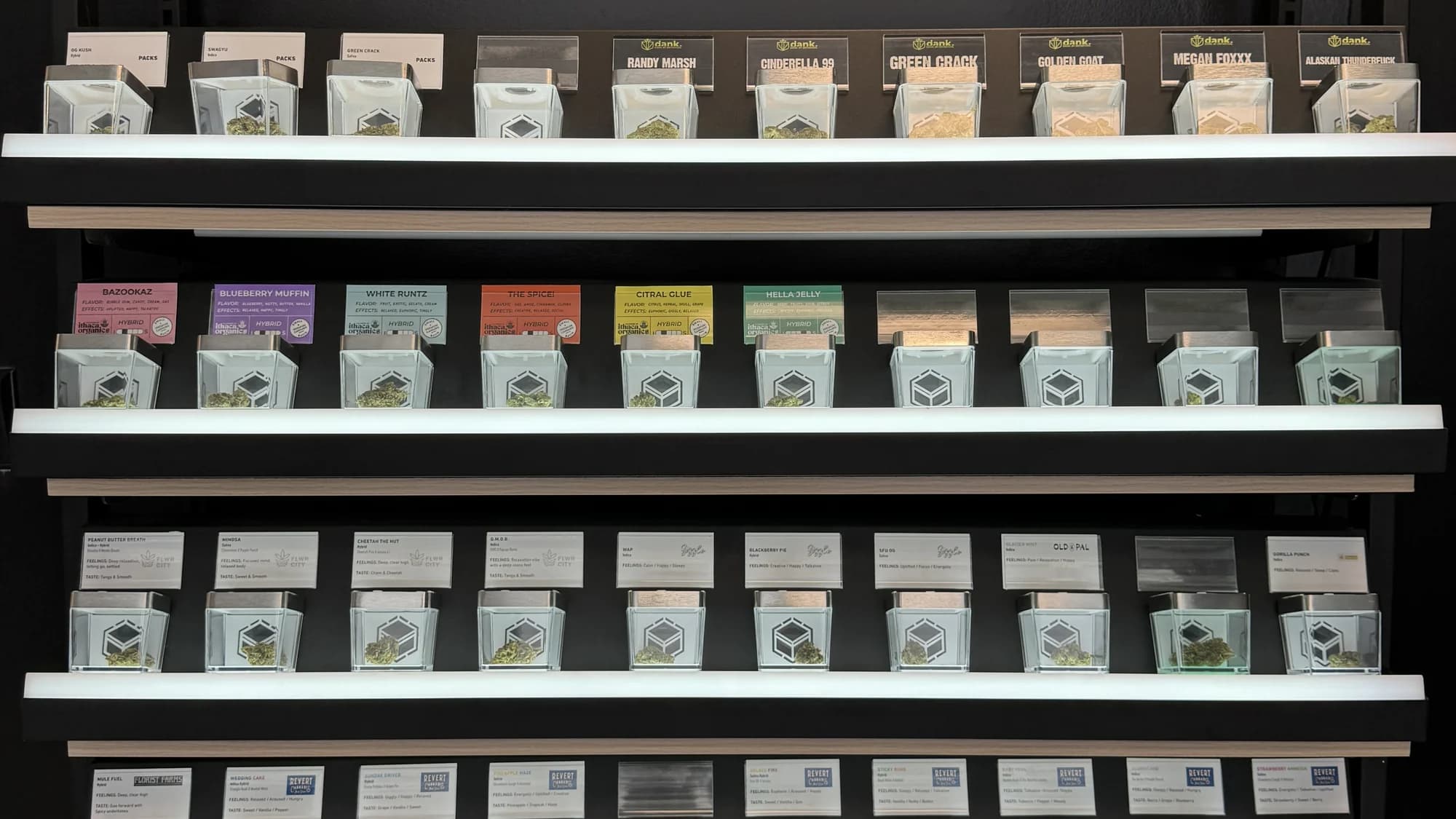
What Are Terpenes?
Terpenes are aromatic compounds found in cannabis and hundreds of other plants. They are responsible for the distinct flavors and aromas of different cannabis strains, from the citrus burst of Lemon Haze to the earthy pine of OG Kush. More importantly, terpenes interact with cannabinoids like THC and CBD to influence the overall effects of cannabis, a phenomenon known as the entourage effect. At Leafology, our Cannabis Ganjier evaluates terpene profiles to make personalized strain recommendations.
Free budtender consultations are available every day at our White Plains location. Our Cannabis Ganjier can provide personalized guidance based on your experience level and preferences.
Myrcene
Myrcene is the most common terpene in cannabis. It has an earthy, herbal, slightly musky aroma similar to cloves and hops. Myrcene-dominant strains are often associated with relaxing, sedating effects. Strains high in myrcene include many indica-leaning varieties. Myrcene is also found in mangoes, hops, thyme, and lemongrass.
Limonene
Limonene produces bright citrus aromas, from lemon to orange to grapefruit. It is the second most common terpene in cannabis. Limonene-dominant strains are often associated with uplifting, mood-enhancing effects. Popular limonene-rich strains include Super Lemon Haze and Lemon Cherry Gelato. Limonene is also found in citrus fruit rinds, juniper, and peppermint.
Pinene
Pinene smells exactly like its name: pine trees. It is the most common terpene in nature and is found in pine needles, rosemary, and basil. Pinene-dominant cannabis strains are associated with alertness and mental clarity. Some research suggests pinene may counteract some of THC's memory-impairing effects.
Caryophyllene
Beta-caryophyllene has a spicy, peppery aroma and is unique among terpenes because it also interacts with the body's CB2 cannabinoid receptors. This makes it the only terpene that may also function as a cannabinoid. Caryophyllene-dominant strains often have warming, spicy flavor profiles. It is also found in black pepper, cloves, and cinnamon.
How to Use Terpene Information
When shopping at Leafology, ask your budtender about the terpene profile of any strain you are considering. Many consumers find that terpene preferences predict their experience more accurately than THC percentage alone. If you enjoyed a strain with high limonene content, you are likely to enjoy other limonene-dominant strains. The Connoisseurs Corner at Leafology features craft flower selected specifically for exceptional terpene profiles.
How Terpenes Are Measured on a COA
Every compliant New York cannabis product ships with a certificate of analysis (COA) from a state-approved lab. The COA lists each terpene as a percentage of total flower weight, typically between 0.05% and 4%. Anything under 1% total terpenes is usually a thinner-feeling flower. Craft flower at Leafology regularly tests above 2.5% total terpenes. Ask the budtender for the COA on any flower you are considering.
Myrcene-Dominant Cultivars at Leafology
Myrcene-forward flower feels heavy, earthy, and relaxing. Shelf examples include Granddaddy Purple, OG Kush, Mimosa, and Blue Dream (borderline hybrid). Pair myrcene with evening, weekend downtime, muscle soreness, or pre-sleep routines. Mango consumed 45 minutes before a myrcene-heavy strain is a widely anecdotal enhancer.
Limonene-Dominant Cultivars
Limonene-forward flower feels bright, uplifted, and mentally sharp. Shelf examples include Super Lemon Haze, Lemon Cherry Gelato, Do-Si-Dos (hybrid lean), and Wedding Cake (hybrid lean). Pair limonene with daytime focus blocks, creative work, and social outings. Limonene is also useful for stress-relief without sedation.
Pinene, Caryophyllene, and Linalool in Practice
Pinene-forward flower (Jack Herer, Dutch Treat) keeps the head clear and is a classic daytime pick. Caryophyllene-forward flower (GSC cuts, Bubba Kush) delivers warm body calm and has the unique property of binding CB2 receptors, giving it an almost anti-anxiety feel. Linalool-forward flower (Lavender, Amnesia Haze) leans floral and is the classic calming-before-bed profile. Our Ganjier can route you directly to the terpene you need.
Using Terpenes to Predict Your Experience
If a past strain worked well, copy its terpene fingerprint, not just its name. Two growers producing “Blue Dream” can deliver completely different terpene profiles depending on phenotype, cure, and storage. The COA tells the true story. When in doubt, lead with myrcene (relax), limonene (uplift), pinene (focus), caryophyllene (calm body), or linalool (sleep) and ignore the brand hype.
Quick Answers
Do terpenes get you high?
Which terpene is best for sleep?
Key Definitions
- Myrcene
- The most prevalent cannabis terpene. Earthy, herbal, clove-like aroma. Associated with relaxing, sedating, couch-lock effects. Also found in mangoes, hops, and lemongrass.
- Limonene
- Bright citrus terpene. Lemon, orange, and grapefruit notes. Associated with uplifted mood, energy, and stress relief. Found in citrus fruit rinds, juniper, and peppermint.
- Pinene
- Fresh pine terpene. Alpha-pinene and beta-pinene dominate. Associated with alertness, memory retention, and easy breathing. Also found in pine needles, rosemary, and basil.
- Caryophyllene
- Spicy, peppery terpene. Unique among terpenes for activating CB2 cannabinoid receptors directly, giving it anti-inflammatory and calming effects. Also found in black pepper, cloves, and cinnamon.
- Linalool
- Floral, lavender-forward terpene. Associated with calm, reduced anxiety, and sleep support. Also found in lavender, coriander, and mint.