What Is Cannabis?
Cannabis is a flowering plant that produces cannabinoids, the chemical compounds responsible for the plant's therapeutic and psychoactive effects. The two most well-known cannabinoids are THC (tetrahydrocannabinol), which produces the "high" associated with cannabis, and CBD (cannabidiol), which is non-intoxicating. Cannabis has been used by humans for thousands of years for medicinal, spiritual, and recreational purposes. In New York State, adults 21 and older can legally purchase and possess cannabis from licensed dispensaries like Leafology in White Plains.
Free budtender consultations are available every day at our White Plains location. Our Cannabis Ganjier can provide personalized guidance based on your experience level and preferences.
Sativas, Indicas, and Hybrids
Cannabis strains are traditionally classified into three categories: sativas (associated with uplifting, energetic effects), indicas (associated with relaxing, sedating effects), and hybrids (a combination of both). Modern cannabis science recognizes that the terpene profile and cannabinoid ratios matter more than the sativa/indica label, but these categories remain useful starting points for conversations with your budtender. At Leafology, our Cannabis Ganjier can help you find the right strain based on your desired effects, not just the label.
How to Consume Cannabis
Cannabis can be consumed in several ways, each with different onset times and durations. Smoking flower provides the fastest onset (1-5 minutes) with effects lasting 1-3 hours. Vaping heats cannabis without combustion, offering a smoother experience with similar timing. Edibles take 30-90 minutes to take effect but last 4-8 hours. Tinctures placed under the tongue work in 15-30 minutes. Topicals are applied to the skin and don't produce a "high." Concentrates offer the highest potency and fastest onset for experienced consumers.
Dosing for Beginners
The most important rule for cannabis beginners: start low and go slow. For flower, try one or two small puffs and wait 10-15 minutes before consuming more. For edibles, start with 2.5-5mg of THC and wait at least 2 hours before taking more. Many first-time consumers take too much too fast, especially with edibles. Our budtenders at Leafology are trained to help beginners find appropriate starting doses based on experience level and desired effects.
What to Expect at a Dispensary
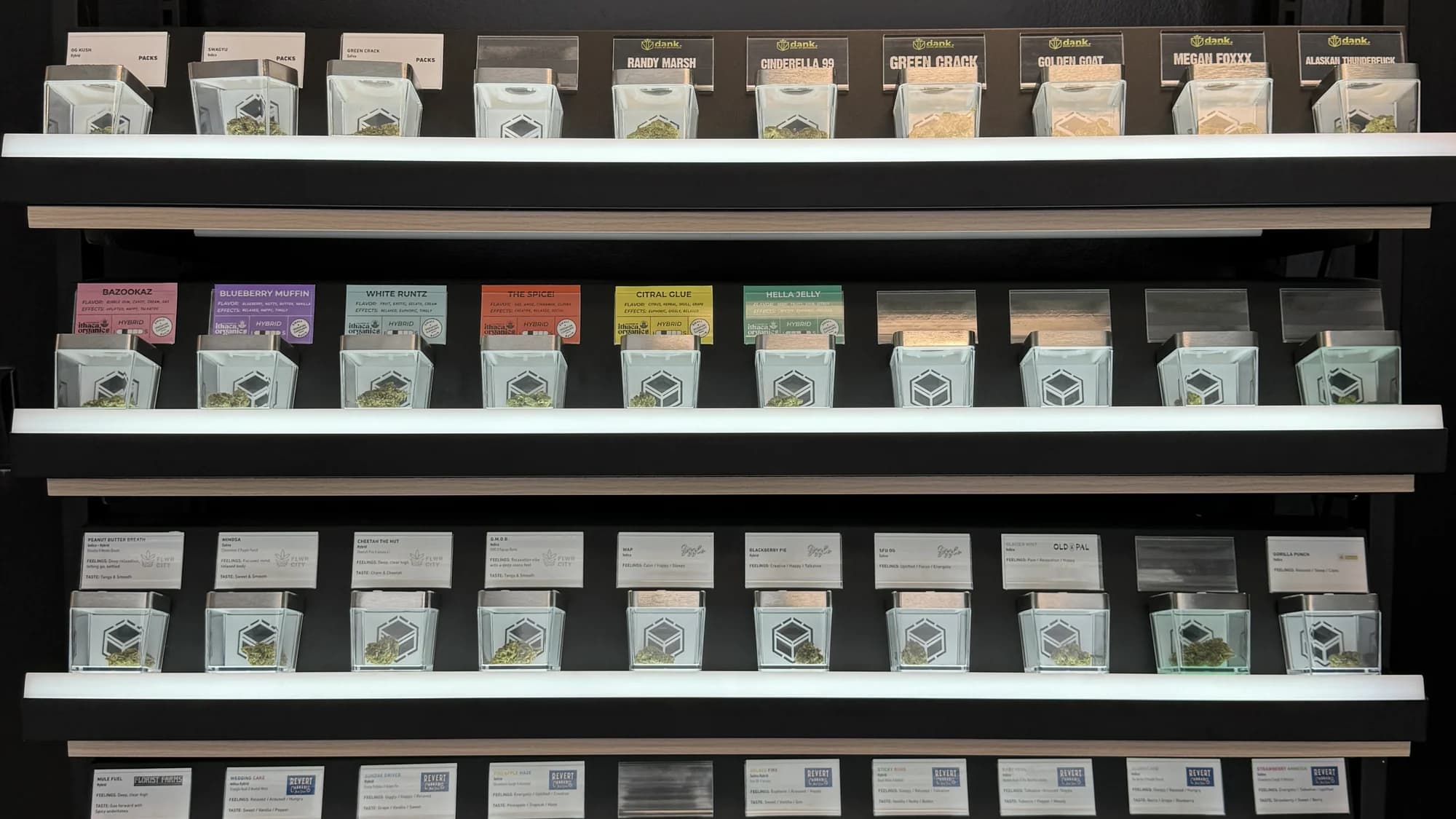
Visiting a licensed dispensary for the first time is straightforward. Bring a valid government-issued photo ID proving you are 21 or older. At Leafology, you will be greeted by a budtender who can answer questions, make recommendations, and walk you through the menu. There is no pressure to buy. Consultations are free. Browse the display cases, ask about terpene profiles, and take your time. Payment is by cash or debit card. Your purchase is packaged in child-resistant, compliant packaging.
New York Cannabis Laws
New York legalized adult-use cannabis in 2021. Adults 21 and older may possess up to 3 ounces of cannabis flower or 24 grams of concentrate. Cannabis may be consumed in private residences and in most places where tobacco smoking is allowed, with some local exceptions. Driving under the influence of cannabis is illegal. Cannabis cannot be taken across state lines. All products sold at licensed dispensaries like Leafology are tested by independent labs and regulated by the New York Office of Cannabis Management (OCM).
Consumption Methods: Onset and Duration Compared
Onset time and duration vary dramatically by format. Smoking or vaporizing cannabis flower produces effects in 1-5 minutes with peak intensity around 15-30 minutes and a total duration of 1-3 hours. Vape cartridges deliver similar timing to flower. Edibles pass through the digestive system and liver, where delta-9 THC converts to 11-hydroxy-THC, producing an onset of 30-90 minutes, a 2-3 hour peak, and a 4-8 hour total duration. Sublingual tinctures absorb through the tissue under the tongue in 15-30 minutes and last 4-6 hours. Dabbed concentrates hit in seconds with high intensity for 1-2 hours. Topicals applied to the skin produce localized, non-intoxicating effects and do not enter the bloodstream in meaningful amounts. Understanding the timing curve for each format is the single best defense against overconsumption.
Cannabinoids in Depth: THC, CBD, CBG, CBN, and Beyond
THC is the cannabinoid responsible for euphoria, appetite stimulation, and the classic cannabis high. CBD is non-intoxicating and is frequently used for calm, inflammation, and recovery. CBG, sometimes called the mother cannabinoid, is non-intoxicating and is associated with focus and a clear-headed feel. CBN appears as THC ages and is widely marketed for sleep. THCV is a minor cannabinoid associated with appetite suppression and energy at higher doses. All products sold at Leafology come with a certificate of analysis from a New York State-approved independent laboratory showing the exact potency of each cannabinoid, along with pesticide, heavy metal, and microbial screens.
Terpenes and the Entourage Effect
Terpenes are the aromatic compounds that give each cannabis strain its signature flavor and nose. The top five in cannabis are myrcene (earthy, clove-like, relaxing), limonene (citrus, uplifting), pinene (fresh pine, alertness), caryophyllene (spicy black pepper, the only terpene that also activates CB2 receptors), and linalool (floral lavender, calming). The entourage effect describes how cannabinoids and terpenes amplify and modulate one another, which is why two strains testing at identical THC percentages can feel completely different. When shopping at Leafology, ask for the terpene breakdown, not just the THC number.
Dosing Safety and Overconsumption
Cannabis is not lethal at any realistic dose, but overconsumption is genuinely unpleasant. Symptoms include anxiety, rapid heartbeat, paranoia, dry mouth, nausea, and drowsiness, and they resolve on their own in 2-6 hours. If you have taken too much, find a quiet space, hydrate with water, eat something with fat and protein, and consider CBD to blunt the intensity of THC. Never drive. Never combine with alcohol on your first session. Start at the lowest effective dose and titrate upward across multiple sessions rather than in a single night.
Safety, Storage, and Responsible Use
Store cannabis in its original child-resistant packaging in a cool, dark, dry place. Keep it completely out of reach of children, pets, and unauthorized adults. Never consume before driving, operating machinery, or any safety-sensitive task. If you are pregnant, nursing, under 21, or on prescription medications that interact with cannabinoids, consult a medical professional before use. Call the New York HOPEline (1-877-8-HOPENY) if use begins to interfere with work, relationships, or health.
Quick Answers
What is cannabis in one sentence?
What is the difference between THC and CBD?
Key Definitions
- Cannabis
- A genus of flowering plants whose flowers, when dried, contain cannabinoids and terpenes consumed for psychoactive, therapeutic, and wellness effects. Sold in New York only through state-licensed dispensaries to adults 21 and older.
- Flower
- The dried, cured, trimmed buds of the cannabis plant, sold in grams (1g, 3.5g eighth, 7g quarter, 14g half, 28g ounce) and consumed by smoking or vaporizing.
- Concentrate
- A cannabis extract refined to high cannabinoid concentration (typically 60-90% THC), including rosin, resin, wax, shatter, diamonds, and distillate, consumed via dab rig, vape, or infused joint.
- Edible
- A food or beverage infused with measured milligrams of cannabinoids, onset typically 30-90 minutes, duration 4-8 hours, standard New York serving is 5 mg THC.
- Cannabinoid
- A chemical compound produced by cannabis (phytocannabinoid) or the human body (endocannabinoid) that interacts with CB1 and CB2 receptors to produce effects. Major phytocannabinoids include THC, CBD, CBG, CBN, and THCV.
- Terpene
- An aromatic hydrocarbon produced by cannabis and many other plants that shapes flavor, aroma, and the overall felt experience through the entourage effect.